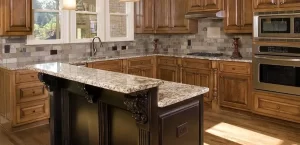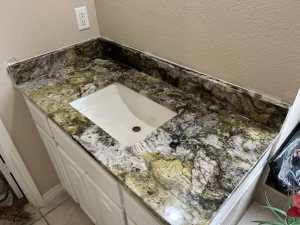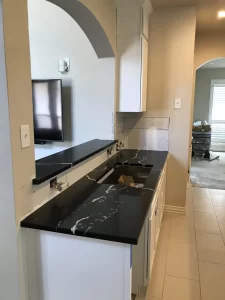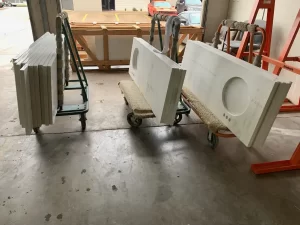
Searching for countertop contractors near me usually means you want more than a pretty slab photo. You need someone who can template accurately, fabricate clean edges, and install without damaging cabinets. This guide explains how to evaluate local countertop contractors so you hire for process quality, not just price. The goal is a kitchen or bath top that fits the first time and stays serviceable for years.
What a countertop contractor actually owns
A capable contractor coordinates material selection, field measurements, shop fabrication, sink and cooktop cutouts, edge profiles, delivery, and final set. Some shops also handle plumbing disconnect and reconnect; others require your plumber on install day. Clarify that boundary early. If you are comparing fabrication shops generally, our overview of what sets local granite companies apart pairs well with this hiring checklist.
Ask who visits your home for templating. Digital templates catch out-of-square walls better than tape alone. Confirm how seams are planned on large islands and whether they will show you a seam drawing before cutting. Seam placement is a design decision as much as a fabrication one. Also ask how they protect finished floors and nearby appliances during carry-in.
If your project includes a waterfall edge, mitered laminate look, or integrated drain boards, confirm the shop has recent examples. Specialty details require different tooling time and tolerance. A contractor who primarily flips basic rectangles may still do fine work, but they should be honest about lead time for complex edges.
Credentials and proof to request
- Recent install photos that match the material you want (quartz, granite, marble, porcelain).
- A written scope covering template, fabrication, install, and what is excluded.
- Lead times for fabrication after template approval.
- Warranty language for workmanship and how material manufacturer coverage works.
- Insurance documentation appropriate for residential install work.
- A clear policy for chips discovered at install and how remakes are scheduled.
Price-only bids that skip templating details or refuse to discuss seam strategy are risky. A slightly higher quote with clear sequencing often costs less than a cheap bid that needs remakes. Local stone fabricators who control their own shop can usually answer process questions without vague handoffs.

How to compare bids without getting lost
Line up apples-to-apples details: material thickness, edge profile, sink type (undermount vs drop-in), cooktop cutout, number of seams, demount of old tops, and disposal. Confirm whether splash is included and how outlet cutouts are handled. If one bid is dramatically lower, find the missing line item instead of assuming you found a bargain.
Visit the slab yard when possible. Photos compress depth and movement. Standing in front of the actual granite or quartz bundle helps you approve or reject a piece before money is spent cutting. Bring cabinet paint samples and flooring chips so color decisions happen under real light. If you cannot visit, ask for labeled photos of the exact slabs reserved for your job, not generic catalog images.
Ask how change orders work if you alter the sink model after template. Sink revisions can force new cutouts or even a remake. Knowing the cost of late changes keeps everyone honest about deadlines.
Install day: what should happen
Cabinets should be complete, level, and permanently set before template. After fabrication, installers dry-fit pieces, set seams, adhere tops, and clean residue. Protect floors and appliances in advance. If plumbing is your responsibility, schedule the plumber for the same day or the next morning so the kitchen is not offline longer than needed. For a deeper look at set techniques, review our granite countertop installation guide.
Inspect edges, overhangs, and sink reveals before the crew leaves. Small chips can sometimes be repaired on site; larger issues need a clear remake plan. Photograph the finished tops and keep the warranty paperwork with your remodel file. Check that the dishwasher has the clearance the manufacturer requires and that the cooktop sits flush without rocking.
Red flags when hiring countertop contractors near me
Be cautious if a contractor pressures you to buy remnant material sight-unseen for a large island, will not discuss seam locations, or asks for full payment before template. Vague “we will figure it out on install day” answers about overhangs or cooktop clearances are another warning. Professional shops plan those details in the shop drawing stage.
Also watch for schedules that sound impossible. Quality fabrication needs time for cutting, polishing, and quality checks. A rush promise that skips those steps can show up as uneven polish or a seam that never sits flush. If a salesperson cannot introduce you to anyone who works in the shop, ask why.
Material questions contractors should help you answer
Granite and quartz both perform well in kitchens when fabricated correctly, but maintenance and heat tolerance differ. Porcelain slabs and sintered stone have their own handling requirements. A good contractor explains tradeoffs without pushing a single SKU. If care after install matters to you, skim our notes on sealing granite countertops so you know what ongoing maintenance really involves.
Edge profiles change both look and wipe-down habits. Softer eased edges clean easily; more ornate ogees collect crumbs. Match the edge to how you actually use the kitchen, not only to a showroom display. For busy family kitchens, durability and cleanability usually beat ornate profiles.
Frequently asked questions
Should I hire a general remodeler or a countertop specialist?
General remodelers can coordinate the whole kitchen, but stone work still goes to a fabricator. Hiring a specialist shop directly often gives you clearer control of slab selection and seam planning. Either path works when roles are documented.
When do I pay deposits?
Common practice is a material deposit after slab approval and a final balance after install. Avoid paying everything up front. Tie payments to milestones you can verify.
How long after template until install?
Lead times vary with shop workload and material type. Ask for a written estimate of fabrication days after you approve the template, then confirm the install appointment when pieces are finished.
Can countertop contractors near me reuse my old cabinets?
Yes, if cabinets are solid, level, and structurally sound. Weak or uneven bases must be corrected before template. New tops will not hide a failing cabinet run.
Do I need to be home for templating and install?
Someone with decision authority should be available for template questions and final inspection. Install crews can work if access is arranged, but punch-list sign-off is smoother when you can walk the tops before they leave.
Next step: talk with a local fabrication team
Bring measurements, appliance specs, and sink model numbers to your consultation. Ask about templating method, seam strategy, and install-day plumbing responsibilities. When you are ready to compare materials in person, call (214) 441-7776 or visit our team to schedule a slab walk-through.
A simple hiring timeline for countertop work
Week one is for slab shortlisting and cabinet confirmation. Week two covers template after cabinets are final. Fabrication then takes the shop’s quoted window, followed by install and plumbing reconnect. Building that timeline into your remodel calendar prevents the classic mistake of painting walls before tops are set and then scuffing fresh paint during carry-in. Countertop contractors near me who communicate that calendar clearly are usually easier to work with than shops that only quote a single magic install date.
If your kitchen remodel has multiple trades, make the fabricator a scheduled dependency rather than an afterthought. Share appliance model numbers early. Confirm who owns sink clips, dishwasher brackets, and cooktop supports. Those small parts create big delays when nobody ordered them.