Quartz remnants near you—and granite leftovers from larger jobs—can be a smart buy for vanities, bars, laundry tops, and small islands. Remnants are not “seconds.” They are unused portions of full slabs left after a bigger fabrication. This guide explains when a remnant is the right move, how to measure, and what to ask a fabricator before you commit.
What a remnant actually is
A full slab is cut for a large kitchen. The unused rectangle or L-shaped piece becomes inventory. That piece still has the same material quality as the original slab; it is simply smaller. Shops rotate remnant racks as projects finish, so inventory changes week to week.
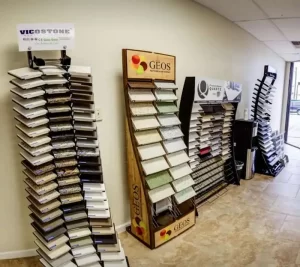
At AA Granite Fabrication Center, remnant shopping sits alongside full-slab work. Browse current options on our remnants page, then visit the shop to confirm thickness, veining direction, and usable area. Sticker dimensions are a starting point; usable area after edge profiling and sink cutouts is what matters.
Remnants can come from granite, quartz, marble, quartzite, or other surfaces the shop fabricates. Always confirm the material type on the tag—do not assume color alone tells you the care rules. A dark gray that looks like quartz in a phone photo may be granite with different sealing needs.
Projects that fit remnants well
- Bathroom vanity tops (single or double bowl, depending on size)
- Coffee bars, butler’s pantries, and laundry counters
- Fireplace surrounds and window sills
- Small islands or peninsula tops when overhangs are modest
- Outdoor pieces only when the material and substrate are rated for exposure
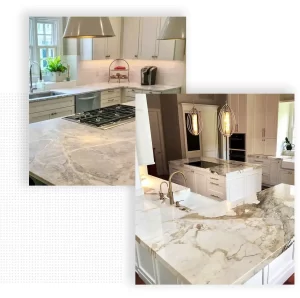
Full perimeter kitchens usually need full slabs so veins and color stay consistent around corners. Forcing a remnant into a large layout often creates awkward seams or mismatched shade lots. If you love a remnant’s look but need more square footage, ask whether a full slab from a similar lot is still available.
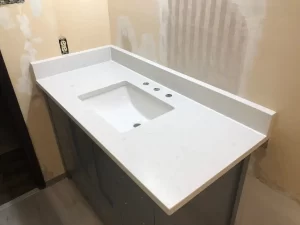
Powder rooms and guest baths are classic remnant wins: short runs, one sink, and a chance to use a premium look without buying a whole kitchen’s worth of stone. Laundry rooms and mudroom benches are similar—utility spaces where a durable remnant outperforms laminate without the full-slab budget.
Edge profiles and remnant yield
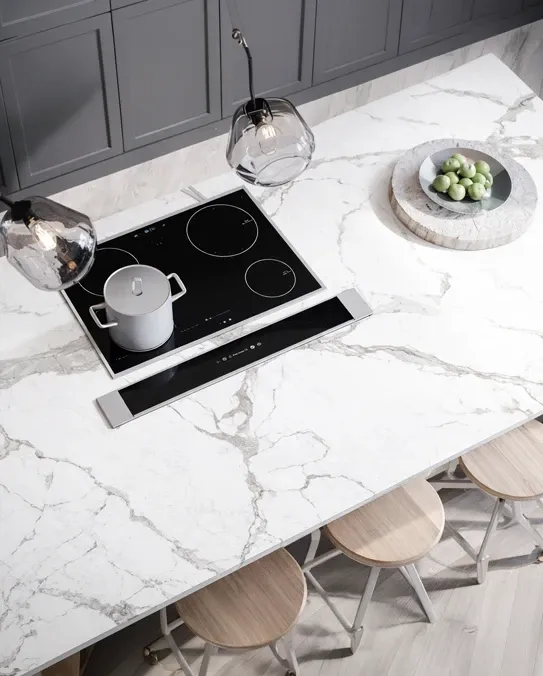
A simple eased edge wastes less material than a deep ogee. On a tight remnant, an aggressive profile can leave corners thin or force a smaller finished footprint than you expected. Ask the fabricator to sketch the finished size after your preferred edge before you buy the piece.
Corner radii and clipped corners also change yield. If your vanity has a radius end, confirm the remnant can accept that shape without cracking near an existing factory cut or prior fabrication edge. Existing polished edges on a remnant may need to be reworked to match the new profile.
How to measure before you shop
Measure the cabinet depth and length, then add overhangs (often about 1 to 1.5 inches past doors on the front edge—confirm with your fabricator). Note sink cutouts and faucet holes. Photograph the space with a tape in frame. Bring those numbers to the shop so staff can filter the rack quickly.
If cabinets are not installed yet, you can still shortlist materials—but final remnant selection should wait until dimensions are firm. Cutting a remnant early and discovering the vanity is an inch wider wastes both stone and schedule.
For double vanities, measure the full run as one piece if you want a continuous top, or as two pieces if a seam or split design is acceptable. That choice changes which remnants qualify. Continuous tops need longer clean pieces; split tops can use two smaller leftovers that almost—but do not need to perfectly—match.
Quartz vs granite remnants
Quartz remnants appeal when you want a consistent pattern and strong stain resistance for baths or bars. Granite remnants bring natural variation and heat tolerance that many cooks prefer for coffee stations near kettles. Marble remnants can look striking in powder rooms if you accept etching as part of the patina.
Compare care expectations on our quartz and granite pages, then judge the specific remnant in person—phone photos flatten movement and thickness cues. Hold samples next to your cabinets under the lighting you actually have at home when possible.
Thickness matters too. Most kitchen and bath tops use three-centimeter material; two-centimeter pieces may need a different build-up or plywood support. Confirm thickness on the tag and in the quote so install day does not surprise your cabinet maker.
Questions to ask the fabricator
- Is the usable area enough after sink and edge profiling?
- Will the edge profile I want leave enough material at the corners?
- Is this piece from a lot that can still match a backsplash or second vanity later?
- What is the turnaround after templating for remnant jobs?
- Does the quote include fabrication, templating, and install—or slab only?
- Who handles plumbing disconnect/reconnect coordination on install day?
Clear answers matter more than the sticker price. A cheap remnant that cannot accept your sink cutout is not a bargain. Ask how the shop marks reserved pieces so your choice is not sold while drawings are still in progress.
Remnants vs full slabs: decision checklist
Choose a remnant when the project is small, the piece fits with comfortable margin, and you do not need vein matching across a long run.
Choose a full slab when the kitchen is large, you want continuous bookmatching, or multiple rooms must match from the same lot.
Still unsure? Bring drawings to a shop visit. Our article on visiting a granite fabrication shop covers what to expect on site, including how remnant pulls fit into a normal appointment.
Budget and timeline realities
Remnants often cost less than buying a full slab for a tiny top, but fabrication labor still applies. Templating, edge work, cutouts, and install are real steps. Ask for a line-item quote so you can compare remnant-plus-fab against a small full-slab package honestly.
Lead times for remnant jobs can be shorter when the piece is already on the rack—but complex edges or busy shop weeks still set the pace. Do not schedule tile backsplash until tops are set unless your tile setter is comfortable working to a template.
Common remnant mistakes to avoid
Buying from a photo without confirming thickness and usable length is the most common mistake. Another is ignoring sink flange size until after the piece is purchased. Farmhouse and large undermount sinks can consume more material than a compact oval bowl. Always map the cutout onto the remnant outline before money changes hands.
People also underestimate overhangs on peninsula ends. An extra inch on three sides can push a “close enough” remnant into the reject pile. When in doubt, leave margin or choose a larger piece. Mixing care products meant for natural stone and engineered quartz without checking labels is another avoidable problem—remnant tops still need the right cleaner for the material family on the tag.
Working with designers and contractors
If a designer is specifying finishes across a whole home, flag remnant choices early. A powder-room remnant that almost matches the kitchen slab may look fine in isolation and wrong next to open sightlines. Contractors should confirm who owns template day and who schedules plumbing so the remnant install does not stall other trades.
For repeating vanity packages, plan inventory with the fabricator instead of hoping the rack stays stocked. Random remnant shopping rarely scales for identical unit sets.
Care after install
Follow the care guidance for that material. Quartz generally needs non-abrasive cleaners; granite often benefits from periodic sealing depending on finish. Avoid assuming remnant tops get different rules—they get the same science as the parent slab. Keep hot pans and harsh chemicals in mind the same way you would on a full kitchen.
FAQ
Are remnants lower quality? No. They are leftover full-slab material. Quality depends on the original stone and how the shop stores and fabricates it.
Can I reserve a remnant? Ask. Popular pieces move quickly; a short hold may be possible with a deposit.
Do you fabricate remnants you sell? We fabricate and install pieces for jobs we produce so edges and cutouts stay consistent.
Can two remnants match? Sometimes, if they came from related lots. Do not count on perfect matches across random rack pieces.
Where do I start? Check current remnants, then call (214) 441-7776 or contact us to confirm sizes before you drive over.
If a remnant fits your vanity or bar, it can save budget without looking like a compromise—provided you measure carefully and fabricate with the same care as a full kitchen. Bring dimensions, ask about usable area, and treat the shop visit as part of the decision—not an afterthought.