Searching for granite countertop fabricators near you usually ends with the same question: can you walk into a shop, see slabs, and understand how custom tops are cut—or is everything behind locked gates? This guide walks through what a public-facing fabrication shop visit looks like, what to bring, and how to leave with clear next steps for templating and install.
What a fabrication shop actually does
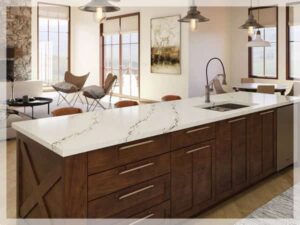
A fabrication shop is where slabs become finished countertops. After cabinets are set and a template captures your layout, the shop cuts sink openings, shapes edges, polishes faces, and prepares seams. That work is different from a big-box remnant rack or a wholesale yard that only sells slabs to trade customers.
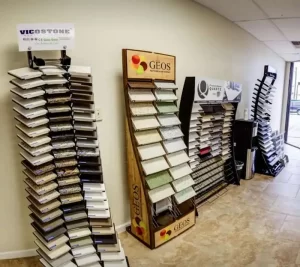
When you visit AA Granite Fabrication Center, you are stepping into that production environment—not a furniture showroom. You will see slabs, samples, and finished edges, and you can talk through sink models, overhangs, and timeline expectations before anyone cuts stone. The goal of the visit is clarity: which material fits your use case, whether a full slab or remnant makes sense, and what has to be true before fabrication starts.
Fabrication also includes quality checks that do not show up in a slab photo—checking for fissures that matter after cutting, confirming thickness at the edges you will see, and planning seam locations so they land where structure and aesthetics allow. Those conversations are easier in person with the piece in front of you.
Are slab yards open to the public?
Some yards are trade-only. Others welcome homeowners during posted hours. Addison-area and DFW searches often ask whether a yard is open to the public because people want to choose stone in person. Our Carrollton shop is set up for homeowners, contractors, and designers—call ahead if you need evening access or a large group walkthrough.
If a listing says “appointment preferred,” take it seriously. Shops run wet saws and forklifts; staff can give you better attention when they know you are coming. Public access also does not mean unsupervised browsing in the cutting bay—safety rules still apply.
Trade-only yards can still be useful if your designer already has an account. For most homeowners comparing fabricators, a shop that combines slab selection with in-house cutting and install is simpler: one team owns the measurements, the cut, and the set day.
Lighting, samples, and color confidence
Shop lighting rarely matches your kitchen exactly. Bring cabinet doors or paint chips, and ask to view slabs near a window or under warmer bulbs when available. Movement that looks calm under cool LEDs can read busier at home. If you are comparing two close colors, photograph both with the same phone settings and review them later in your actual space.
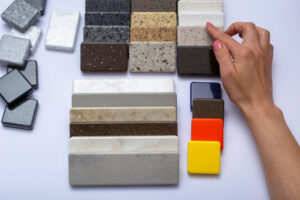
Samples help for edge and finish decisions, but a full slab or large remnant shows the pattern scale you will live with. Do not finalize a dramatic vein pattern from a four-inch chip alone.
What to bring to your visit
- Rough kitchen or bath measurements (even phone photos of cabinets help)
- Sink and faucet models if already chosen, or a short list of options
- Cabinet door or paint samples for color matching
- Notes on cooktop, dishwasher, and overhang preferences
- Questions about seams, edge profiles, and remnant sizes for smaller tops
- A sense of timeline—cabinet install date, move-in target, or remodel phase
You do not need final drawings on day one. You do need enough detail that the team can flag whether a full slab, a remade layout, or a remnant is the smarter buy. If appliances are undecided, say so; we can talk ranges of cutout sizes without locking a model too early.
How the visit usually flows
1. Goals and use case. Kitchen island, perimeter, vanity, outdoor top—each has different heat, stain, and thickness considerations. Outdoor work especially needs materials and substrates rated for exposure.
2. Material shortlist. Granite, quartz, marble, quartzite, and porcelain each behave differently. Our materials overview and specific pages for granite and quartz are useful homework before you arrive.
3. Edge and sink planning. Edge profile changes both look and price. Sink cutouts must match the exact model. Undermount, drop-in, and farmhouse sinks each change how the shop supports the cut.
4. Timeline talk. Templating typically waits until cabinets are set and leveled. Fabrication follows; install is scheduled when the shop finishes your pieces. Ask about current lead times so plumbing and backsplash schedules stay realistic.
5. Next-step summary. A good visit ends with written notes: preferred materials, open decisions, and what must happen before template day.
Homeowners vs builders and designers
Residential projects often start with a showroom visit and a later template. Builders and designers may send drawings first, then schedule a slab pull. Commercial and multifamily work adds repeating unit templates and punch-list discipline. Tell us which path you are on so we schedule the right appointment length.
Designers often need vein photos under consistent lighting and confirmation that a lot can cover multiple rooms. Builders need schedule reliability and clear change-order habits. Homeowners usually need education on care and seam expectations. The shop visit should match that audience.
Red flags when comparing fabricators
- Quotes without asking about sink model or edge profile
- No discussion of seam placement on islands or U-shapes
- Promises to cut before cabinets are final
- Unwillingness to show recent installs or edge samples
- Vague answers about who templates, who installs, and who owns punch-list fixes
A serious shop talks about process—not only price per square foot. Price matters, but an incomplete scope is how projects grow after the contract is signed.
After you leave: templating and install
Once cabinets are ready, a templater captures the true layout. Fabrication then follows your approved drawings. Installers set the pieces, seal where specified, and leave you with care guidance. If you are still comparing teams, our guide on finding granite companies pairs well with an in-person shop visit.
Between visit and template, lock sink and faucet models if you can. Late model changes force recuts or awkward patch work. If a long-lead sink is delayed, tell the shop early so fabrication is not started against the wrong cutout.
FAQ
Do I need an appointment? Walk-ins during business hours are often fine; appointments help for large projects or designer meetings. Call (214) 441-7776 to confirm.
Can I buy a slab and have someone else install? Ask at the visit. Many projects are fabricated and installed by the same shop so seams and edges stay consistent.
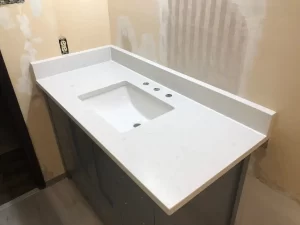
What if I only need a vanity top? Remnants may fit. See the remnants page or ask staff to pull sizes while you are there.
How long after template until install? It depends on shop load and material. You should leave with a realistic window, not a vague “soon.”
Are you near Addison / North Dallas? Our shop is in Carrollton with service across the DFW metro—including Addison and nearby suburbs. Geography belongs in the visit logistics, not every sentence of the project plan.
Ready to see stone in person? Contact us or call (214) 441-7776 to plan your shop visit. Bring measurements if you have them; we will help you turn a shortlist into a fabrication plan.